Commerce & Backend Reporting
Commerce, Subscriptions & Acquisition Reporting Backend
Payment and subscription workflows, acquisition metadata, and reporting APIs within the same connected-device product.
Connected-device product (same product as telemetry case) · Product team · Selected product work
My role & contribution
Backend/integration contributions within the same product team as the telemetry case. These two cases describe different work in one product, not separate clients.
Selected backend/reporting work
The problem
Commerce and application workflows needed to carry acquisition context from checkout into backend reporting. I contributed payment/subscription integrations, event mapping, attribution data handling, and reporting logic within an existing connected-device product. The work connects operational backend behavior to usable measurement; it does not claim a completed cross-product LTV or cohort warehouse.
The existing workflow
Website acquisition context, payment events, application state, and ad spend are different inputs. Checkout completion, account activation, and channel reporting need explicit mappings rather than a single generic conversion count.
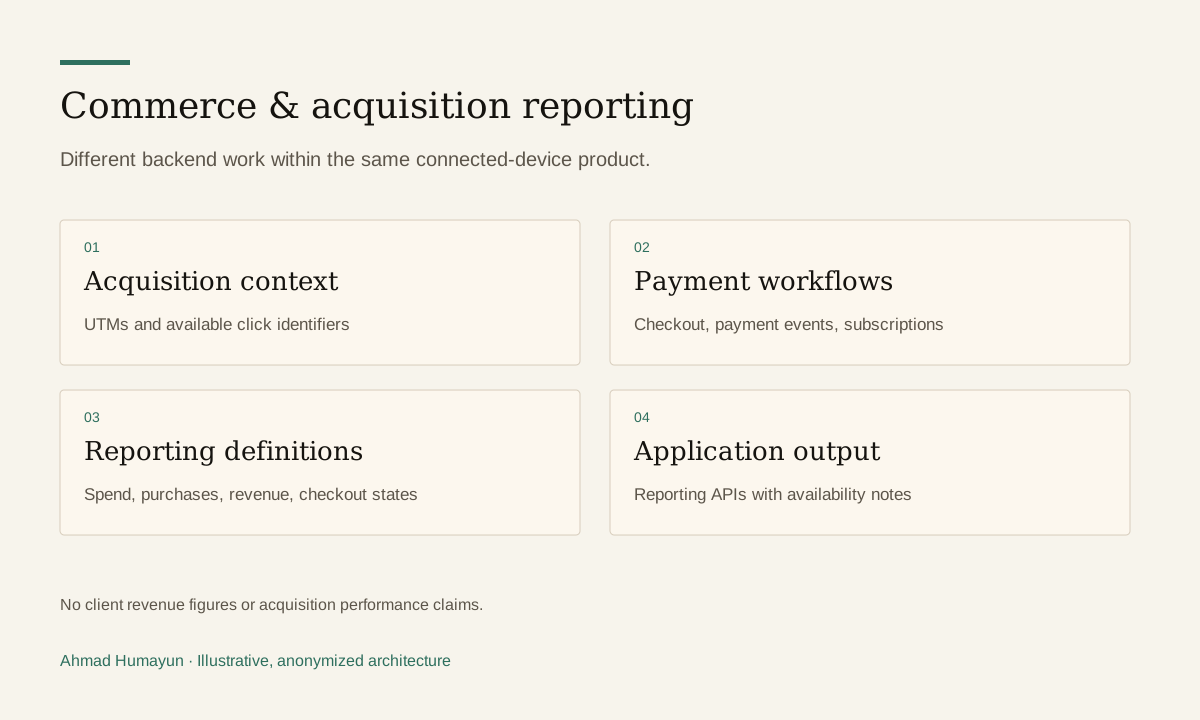
System flow
01
Acquisition context
Website tracking supplies available UTMs and click identifiers.
02
Payment integration
Checkout metadata and payment/subscription events connect to backend workflows.
03
Reporting logic
Spend, purchases, revenue, and checkout states are handled with explicit definitions.
04
Usable output
Reporting APIs expose results with source and availability notes.
Key engineering decisions
Carry acquisition context across checkout
UTM and click identifiers are preserved alongside trusted backend references so later event handling and reporting can use the available acquisition context.
Keep source definitions visible
Advertising-attributed sales, checkout counts, website purchases, and reporting denominators are not interchangeable. Outputs need their own definitions and availability notes.
Connect payments to operational behavior
Payment and subscription events also drive account/application workflows. Reporting is one consumer of the integration, not its only purpose.
Difficult problems
- Preserving attribution metadata through checkout and backend events.
- Mapping payment events to application workflows and reporting entities.
- Combining spend, purchases, revenue, and checkout states without hiding differences in source definitions.
- Handling unavailable reporting inputs without inventing zero values.
Work contributed
- Built and maintained payment/subscription backend integrations and webhook-driven workflows.
- Worked on UTM/click-identifier handling and server-side event mapping.
- Connected acquisition and payment data to reporting APIs.
- Implemented reporting calculations with explicit date ranges, missing-data handling, and source-specific definitions.
Validation
- Reporting calculations explicitly define date windows and purchase/spend denominators.
- The reporting implementation returns availability notes for missing inputs.
- Checkout integration carries defined acquisition metadata and supports distinct payment/subscription modes.
- The described scope is acquisition/payment reporting and backend integration within this product.
Supported outcome
- Connected payment/acquisition context to backend reporting workflows.
- Exposed channel and checkout reporting through defined API outputs.
- Supported commerce and subscription operations within the existing application.
- Kept reported attribution and actual payment/transaction concepts distinct.
Technologies in context
Stripe · TypeScript / Node.js · REST APIs · Webhooks · AWS Lambda · SQL · Marketing platform APIs
Related services & work
Working through a similar problem?
Share the workflow and the output your team needs. We can identify a focused starting point.
Discuss your workflow